Drone photography pricing strategies
Setting Your Rates in the US Drone Photography Market
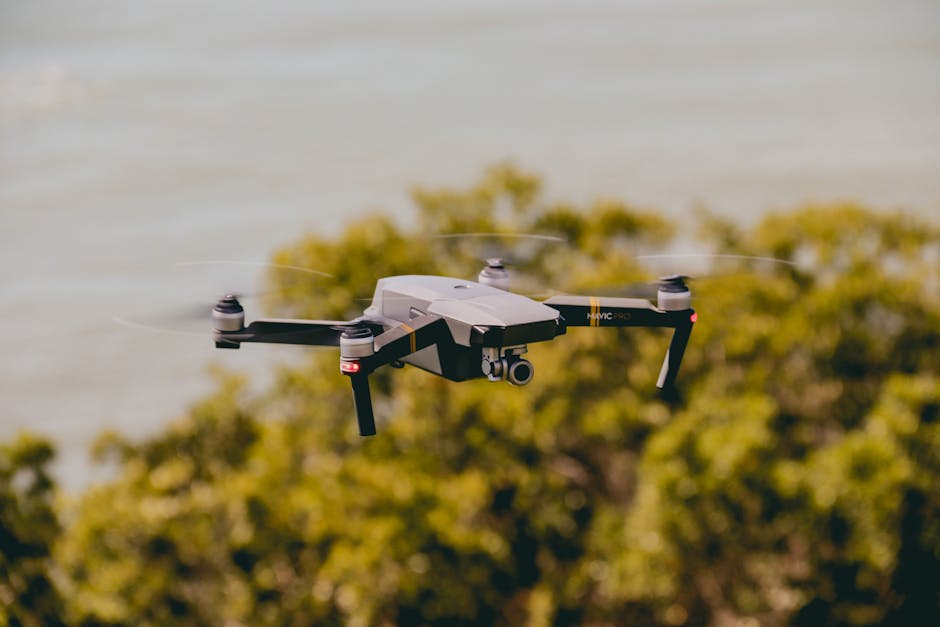
The FAA has issued over 350,000 Part 107 remote pilot certificates as of 2024, and the commercial drone photography industry continues expanding across real estate, construction, insurance, agriculture, and media production. With this growth comes a persistent challenge: determining what to charge clients. Unlike traditional photography, drone work involves equipment costs, licensing requirements, weather dependencies, and regulatory compliance that directly impact your pricing structure. This guide provides a practical framework for setting and adjusting your drone photography rates based on real US market conditions.
Understanding the US Drone Photography Economy
The US drone services market generates over $2 billion annually, with aerial photography and videography accounting for roughly 60% of commercial applications. Pricing varies dramatically by region, with metropolitan areas like New York, Los Angeles, Chicago, and Miami commanding premium rates, while smaller markets in the Midwest and South operate at 20-40% lower price points. Understanding where your market falls within this spectrum is essential before setting your rates.
Your pricing must account for three distinct cost categories: fixed costs that remain constant regardless of projects, variable costs that scale with each job, and opportunity costs representing income foregone when choosing one project over another. Many newer drone pilots focus only on variable costs?fuel, travel time, and memory cards?while neglecting equipment depreciation, insurance premiums, software subscriptions, and the hours spent on post-processing and client communication.
Core Pricing Models for US Drone Photographers
Hourly Rate Structure
The simplest approach, hourly pricing works well for client work where scope may change or extend during a shoot. Most experienced US drone pilots command $175-300 per hour for standard commercial work, with certified mapping specialists and thermal imaging operators charging $250-450 per hour. When setting your hourly rate, calculate your annual income goal, divide by billable hours available (typically 1,000-1,200 per year accounting for travel, weather cancelations, and admin work), and add 30-40% for business expenses.
Project-Based Pricing
Fixed project rates provide clarity for clients and protect you from scope creep. This model requires estimating total hours?including preparation, travel, flight time, post-processing, and delivery?then multiplying by your effective hourly rate. Real estate agents typically expect to pay $150-400 for standard aerial stills of a residential property, while commercial real estate portfolios may require $500-2,500 per assignment depending on property count and deliverables.
Day Rate Structure
For productions, events, and extended commercial projects, day rates provide the most predictable income. Standard day rates in US markets range from $1,200-2,500 for a qualified Part 107 pilot, with experienced cinematographers commanding $2,000-4,000 per day. Always include half-day rates at 60-70% of full day rates to capture shorter assignments while maintaining value.
Calculating Your Cost of Business
Before setting prices, you need to understand your actual cost structure. Many drone pilots underprice their services because they fail to account for the true cost of operating their business. Here's a framework for calculating your baseline costs:
| Expense Category | Annual Cost (US Average) | Notes |
|---|---|---|
| Equipment depreciation (DJI Mavic 3 Pro or equivalent) | $1,500-2,500 | 3-year replacement cycle assumed |
| Liability insurance (Part 107 compliant) | $500-1,500 | Varies by coverage limits and claims history |
| Software subscriptions (LR, PTGui, mapping tools) | $600-1,200 | Adobe Creative Cloud + specialized software |
| FAA compliance (registration, recurrent training) | $150-300 | Includes TRUST certificate if needed |
| Vehicle expenses (fuel, maintenance, depreciation) | $3,000-6,000 | Attributed portion of total vehicle costs |
| Marketing and website | $1,000-3,000 | Portfolio hosting, Google Ads, networking |
| Accounting and business registration | $500-1,500 | LLC filing, quarterly taxes, professional services |
| Total Annual Overhead | $8,250-16,000 | Before any income or labor compensation |
Beyond these fixed costs, you must account for variable expenses including travel time (at your effective hourly rate), SD cards, batteries consumed during shoots, and any specialized equipment rental. A realistic minimum project cost should cover your direct expenses plus a prorated contribution to overhead plus appropriate profit margin.
Value-Based Pricing Strategies
Cost-plus pricing provides a floor, but value-based pricing captures what your work is actually worth to clients. A real estate agent who sells a $500,000 property using your aerial imagery may attribute $10,000-30,000 in added sale value to professional photography?including your drone shots. You're not entitled to all that value, but capturing 2-5% of the incremental value your work creates is reasonable and defensible.
To implement value-based pricing, identify the tangible outcomes your drone photography enables for clients. Construction companies using your progress documentation for investor updates, insurance adjusters using your roof inspection imagery to process claims faster, and tourism boards using your content to increase visitor spending?all derive measurable value from your work. Price accordingly, not merely based on your costs.
"The client doesn't care about your equipment costs or flight time. They care about the property selling faster, the insurance claim closing sooner, or the marketing campaign generating leads. Once you understand their outcome, pricing becomes straightforward."
Industry-Specific Pricing Frameworks
Real Estate Photography
The most accessible market for new drone pilots, residential real estate aerial photography typically ranges from $150-400 per listing depending on property value and market. Luxury properties ($2M+) in competitive markets like San Francisco, Boston, or Palm Beach often justify $400-800 for premium aerial packages. Commercial real estate scales higher, with portfolio work for property management companies commanding $1,500-5,000+ per engagement.
Construction and Engineering
Construction sites require regular progress documentation, making these clients excellent for recurring revenue relationships. Standard progress shots run $300-600 per site visit, while comprehensive mapping and 3D modeling services range from $1,500-5,000 per project. clients in this sector include general contractors, developers, and engineering firms working on infrastructure projects?many of whom have budgets allocated specifically for drone documentation.
Insurance and Roof Inspections
Insurance-related work has grown substantially, driven by carriers seeking to reduce adjuster visits. Drone-based roof inspections typically pay $200-500 per structure, with multi-property inspections offering volume discounts. Thermal imaging inspections for insurance claims or energy assessments command premiums of 50-100% over standard visible-light inspections due to specialized equipment and certification requirements.
Film and Television Production
Production work offers the highest rates but requires the most experience and equipment. Day rates for qualified aerial cinematographers range from $2,000-5,000+ depending on project budget, complexity, and pilot reputation. Working through union productions requires understanding SAG-AFTRA and IATSE agreements, which establish minimum rates and working conditions. Non-union commercial and documentary work operates under negotiated rates that typically fall 20-30% below union scale.
Legal Requirements Affecting Your Pricing
Every US commercial drone operator must maintain FAA Part 107 certification, register drones weighing over 0.55 pounds, and operate within FAA airspace regulations. These aren't optional extras?they're legal requirements that affect your ability to work and therefore affect your pricing. Clients increasingly request proof of Part 107 certification and insurance certificates before booking, meaning compliance directly impacts your market access.
-
Essential Documentation Checklist:
- FAA Part 107 Remote Pilot Certificate (or valid TRUST certificate for recreational flights)
- Drone registration with FAA (registration number displayed on aircraft)
- Current Certificate of Insurance (COI) naming clients as additional insured when required
- LAANC authorization for operations in controlled airspace
- State business license and any local permits required by your city or county
- Signed client contracts specifying scope, deliverables, and usage rights
- Model release forms if applicable for the shoot location
Without proper insurance, a single incident could expose your personal assets to liability claims. General liability coverage for drone operations typically costs $500-1,500 annually for $1M coverage, while errors and omissions (E&O) insurance protecting against claims related to your deliverables adds another $500-1,000. These costs must be factored into your pricing regardless of whether clients require certificates.
Building Your Pricing Structure
Start by establishing three service tiers that provide options across your target market. A basic tier captures price-sensitive clients and prevents them from choosing lower-quality competitors. A standard tier represents your core offering with the best margin opportunity. A premium tier showcases your best work and establishes market positioning while capturing high-value clients who prioritize quality over cost.
Example pricing tiers for residential real estate:
- Essential Package ($175): 5-10 edited aerial images, 24-hour turnaround, digital delivery, basic web usage rights
- Professional Package ($275): 15-20 edited images, same-day or next-day turnaround, full usage rights, complementary ground-level images
- Premium Package ($450): Unlimited shots, priority 4-hour turnaround, video clip included, full exclusive rights, direct liaison with listing agent
Each tier should be differentiated by tangible value?not arbitrary feature bundling. Clients should clearly see why the middle option represents the best value, why the premium option justifies the additional cost, and why the basic option exists for budget constraints rather than because you lack confidence in your core service.
Common Pricing Mistakes to Avoid
Underpricing to win business undermines the entire market. When drone pilots charge $75 for work that requires $200 of their time and expertise, they train clients to expect those rates and devalue the profession. Sustainable pricing requires believing your work has worth and communicating that belief through your rates.
Failure to charge for travel time and setup is another common error. A two-hour round trip for a 30-minute flight represents four hours of your day, even if only 30 minutes involves actual drone operation. Build travel time into your estimates and charge for distances beyond a base radius (typically 25-50 miles depending on your market) at your standard hourly rate.
Not requiring deposits exposes you to last-minute cancelations without compensation. Standard practice requires 25-50% deposits for project bookings, with cancelation policies specifying forfeiture of deposit for notice under 48-72 hours. This protects your schedule and ensures serious inquiries only.
Adjusting Rates Over Time
Rates should increase annually by at least 3-5% to keep pace with inflation and demonstrate growing value. Experienced pilots who have built portfolios and client relationships should increase rates more aggressively?10-15% annually for the first three years is reasonable as you build reputation and expertise. Communicate increases clearly, typically 30-60 days before implementation, with explanation if clients request justification.
Consider implementing annual price increases as standard practice, rather than reactive adjustments when costs rise. Clients expect gradual increases and accept them readily when communicated professionally. Avoid the temptation to keep rates flat to retain clients?your time and expertise deserve compensation that reflects your actual value in the market.
Final Thoughts
Effective drone photography pricing in the US requires balancing market realities with business sustainability. Start with cost-based calculations to establish your floor, research competitor rates in your specific market to understand ceiling opportunities, and structure your offerings around value delivered to clients. As you gain experience and build a portfolio demonstrating consistent results, price accordingly?you've earned the right to compensation that reflects your expertise.