Drone photography in different seasons
Drone Photography in Different Seasons: A Year-Round Guide for US Pilots
By Alex Rivera ? FAA Part 107 Certified Drone Pilot
Timing separates competent drone operators from exceptional ones. The seasonal rhythms of the United States create distinct photographic opportunities?and distinct operational challenges?that demand different approaches each quarter of the year. After logging hundreds of flight hours across commercial shoots and documentary projects from the Maine coast to the Mojave Desert, I've learned that seasonal adaptation isn't optional. It's the difference between a usable shot and a standout one, between a safe flight and a close call.
This guide breaks down what actually matters when planning aerial work throughout the American calendar: light behavior, weather risks, regulatory considerations tied to seasonal airspace changes, and the specific gear adjustments that keep you flying. No generic advice?just what works on the ground across the four seasons.
Spring: Transition, Instability, and Renewal
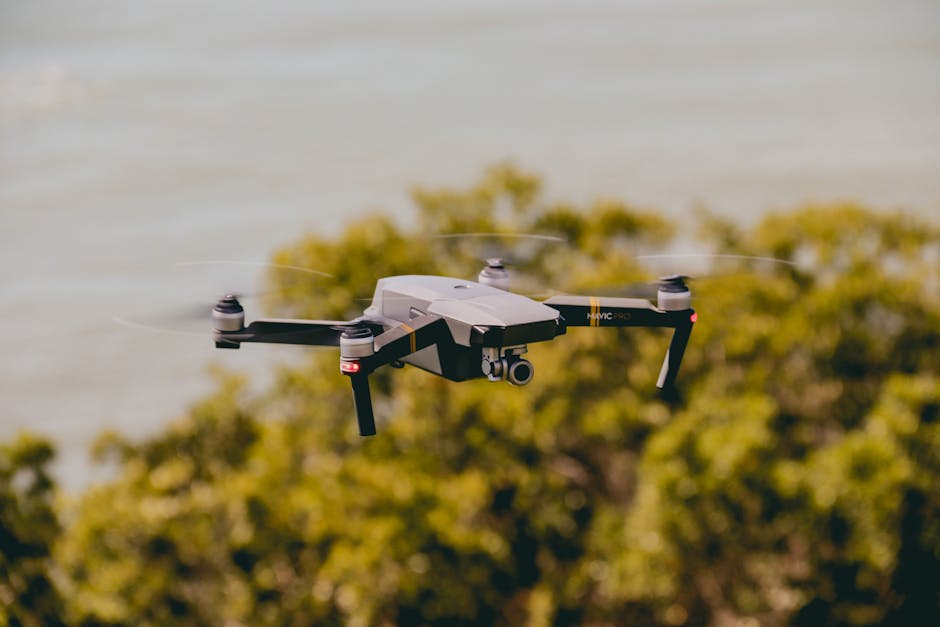
Spring in the US runs from March through May, but "spring" means something entirely different in Minneapolis than it does in Austin. The transition from winter dormancy to summer growth creates compelling visual narratives?the budding deciduous forests of the Northeast, wildflower blooms in Texas Hill Country, snowmelt swelling rivers in the Mountain West. But spring also delivers some of the most hazardous flying conditions of the year.
Weather Patterns and Risk Assessment
Spring marks the beginning of severe weather season across the central US. The clash between retreating cold air masses and advancing warm, moist Gulf air generates the frontal boundaries that power tornado outbreaks across Tornado Alley?roughly from North Texas through Oklahoma, Kansas, and into Nebraska. For drone pilots, these systems bring three specific threats:
- Convective wind gusts: Frontal boundaries can produce gust fronts exceeding 40 mph, sometimes miles ahead of visible precipitation. Your DJI app might show 8 mph winds at ground level, but a passing dry line can spike winds at 200 feet AGL without warning.
- Rapid pressure changes: Barometric pressure swings during frontal passage affect altimeter readings in drones that rely on barometric sensors for altitude hold. This can cause unexpected altitude drift.
- Low-level wind shear: Temperature inversions common in spring mornings can create shear layers where wind speed or direction changes dramatically across a narrow altitude band?sometimes within the first 100 feet AGL.
The practical approach: check NOAA's Surface Analysis Chart and Storm Prediction Center outlooks before committing to a shoot. If there's a slight risk or higher outlook for severe storms within 100 miles of your location, scrub the flight. No shot is worth fighting a gust front.
Light Quality and Daylength
Spring light changes faster than any other season. The vernal equinox in late March delivers roughly 12 hours of daylight nationwide, but by the summer solstice in June, locations at 45—N latitude (roughly Minneapolis, Portland, Maine) gain nearly 4 additional hours of shooting window. This rapid daylength change means golden hour timing shifts noticeably week to week?you can't rely on last month's shoot schedule.
Key Data Point: At 40—N latitude (roughly Denver, Philadelphia, Reno), golden hour duration expands from approximately 45 minutes at the spring equinox to 75 minutes by late May due to the sun's lower angle trajectory at higher latitudes during summer evenings. Plan your arrival times accordingly.
Fog, Mist, and Atmospheric Depth
Spring mornings frequently feature radiation fog?ground-level fog formed by overnight radiational cooling under clear skies. For aerial photography, this is gold. A thin fog layer at 50-100 feet AGL creates natural separation between foreground and background elements, adding depth to compositions that would appear flat under clear conditions. The trick is timing: radiation fog typically burns off within 2-3 hours of sunrise, so you need to be airborne at first light.
Valley fog in mountainous regions?common in the Appalachians and Rockies during spring?persists longer and can reach depths of several hundred feet. Shooting from above the fog layer with a valley floor blanketed in white creates a winter aesthetic without the cold-weather battery penalties. The Blue Ridge Parkway in Virginia and Tennessee offers reliable valley fog opportunities through April.
Battery Performance in Variable Temperatures
Spring temperatures in much of the US hover in the 40-60—F range during early morning shoots?cool enough to affect lithium polymer battery chemistry but not cold enough to trigger aggressive voltage sag. Expect roughly 10-15% reduced flight time compared to 70—F conditions. Pre-warming batteries in your vehicle or using insulated battery wraps extends effective capacity.
Pro Tip: In variable spring temperatures, monitor your voltage per-cell readout in real-time rather than relying on percentage remaining. LiPo cells maintain voltage until late in the discharge cycle, then drop rapidly under load. In cooler temperatures, that drop happens sooner. If you see any cell dropping below 3.4V under load, land immediately?regardless of what the percentage indicator shows.
Summer: Peak Light, Peak Heat, Peak Competition
Summer presents a paradox: the longest daylight hours and most consistent weather conditions, but also the harshest light, the most crowded airspace, and the most demanding thermal environment for both pilot and equipment. June through August is when most hobbyists fly most frequently, which means situational awareness becomes critical.
Light Quality: The Midday Problem
The summer solstice places the sun at its highest annual angle. At noon in late June, the sun reaches approximately 73— elevation at 35—N latitude (Albuquerque, Oklahoma City, Bakersfield). This overhead lighting produces minimal shadows and maximum contrast?a combination that flattens terrain features and blows out highlights on reflective surfaces like water, concrete, and light-colored rock.
The solution isn't avoiding summer entirely; it's restructuring your shooting schedule. Summer aerial work breaks into three distinct windows:
- Golden hour (first hour after sunrise): Low-angle light rakes across terrain, emphasizing texture in agricultural fields, urban architecture, and geological features. Air is typically calmest.
- High-angle harsh light (9 AM - 5 PM): Suitable for mapping, orthophotogrammetry, and inspection work where texture isn't the priority. Avoid for creative work.
- Golden hour (last hour before sunset): Similar advantages to morning golden hour, but with warmer color temperature. Air may be turbulent due to daytime heating.
For commercial operators working construction progress documentation or real estate, the midday window works fine?clients want visibility, not artistic shadow play. But for cinematography or fine art work, restrict summer shooting to the golden hour shoulders.
Heat, Thermals, and Aircraft Performance
Summer afternoon temperatures routinely exceed 90—F across much of the southern and central US. Heat affects drone operations through three mechanisms:
Battery chemistry: Lithium polymer batteries perform optimally between 60-80—F. Above 95—F, internal resistance increases, and under heavy load (rapid ascents, sport mode flight), cells can swell or vent. Never leave batteries in a hot vehicle; internal temperatures can exceed 140—F even when ambient air is 95—F.
Density altitude: Hot air is less dense. At 95—F and sea level, air density equals that of standard conditions at roughly 2,000 feet elevation. Your propellers generate less lift per RPM, motors work harder, and effective payload capacity decreases. For heavy-lift cinema drones carrying RED or ARRI payloads, summer heat can push beyond performance margins.
Thermal activity: Solar heating of the ground creates rising columns of warm air?thermals. Glider pilots chase them; drone pilots avoid them. Thermals create localized updrafts that can exceed 1,000 feet per minute, but between thermals, sinking air can push a drone toward the ground unexpectedly. This turbulence is most pronounced over varied terrain?urban heat islands adjacent to parks, agricultural fields bordering water bodies, canyon walls in the West.
Key Data Point: Consumer drones in the 1-2 kg class (Mavic 3, Air 2S, Mini series) typically maintain position in winds up to 20-25 mph. However, thermal gusts can produce momentary wind shear exceeding 30 mph even when surface winds read calm. In summer afternoon conditions over varied terrain, expect turbulence between 200-400 feet AGL regardless of ground-level wind readings.
Airspace Congestion and Part 107 Considerations
Summer means more pilots in the air?both manned and unmanned. Recreational drone flights peak during summer vacation season, and manned general aviation activity increases correspondingly. For Part 107 operators, this raises collision risk in uncontrolled airspace (Class G) where VFR traffic operates without ATC separation.
The standard see-and-avoid protocol works, but visual detection of small drones beyond 400 feet becomes unreliable?and manned aircraft closing speeds make reaction time critical. A Cessna 172 cruising at 120 knots covers one nautical mile in 30 seconds. If you're at 300 feet AGL and a manned aircraft descends toward a nearby private airstrip, you may have less than 20 seconds from visual acquisition to conflict.
Pro Tip: In summer months, always check for temporary flight restrictions (TFRs) before flying, even in familiar locations. Summer brings airshows, wildfire suppression operations, and sporting event TFRs that appear with minimal notice. The FAA TFR list updates in real-time, and violating a wildfire TFR carries penalties up to $20,000 plus potential criminal charges. Build a habit of checking faa.gov/tfr before every flight.
Fall: Peak Aesthetics, Variable Conditions
For and travel photography, fall delivers the year's most compelling color palettes. The autumn foliage transition draws photographers to New England, the Great Smoky Mountains, the Upper Midwest, and the Colorado Rockies. But fall also brings rapid weather deterioration as polar air masses begin pushing south, shortening daylight, and introducing early winter conditions at elevation.
Foliage Timing: Regional Variation Across the US
Fall color progression follows latitudinal and elevational gradients. Peak timing varies by region and shifts annually based on late summer precipitation, early fall temperature patterns, and soil moisture conditions. The general progression:
| Region | Typical Peak Window | Key Locations | Optimal Drone Altitude |
|---|---|---|---|
| Northern New England | Late September - Early October | Northern NH, VT, ME | 200-400 ft AGL for forest canopy detail |
| Southern New England | Mid-October | CT, MA, RI, coastal NH/ME | 100-300 ft AGL for mixed coastal/forest |
| Appalachian Mountains | Late October - Early November | Blue Ridge Parkway, Great Smokies | 300-400 ft AGL for valley/ridge context |
| Upper Midwest | Late September - Mid-October | Upper Peninsula MI, northern WI, MN | 200-400 ft AGL for lake/forest compositions |
| Rocky Mountains | Mid-September - Early October | CO, WY, MT aspen groves | 100-300 ft AGL for grove isolation shots |
| Pacific Northwest | Late October - Early November | WA, OR Cascades, coastal ranges | 200-400 ft AGL for mixed conifer/deciduous |
These windows compress into 7-10 days of true peak color at any given location. Miss it by a week early, and you'll capture green mixed with turning foliage?visually interesting but not the saturated color clients expect. Miss it by a week late, and you're shooting bare branches and brown leaf litter.
State tourism departments and foliage tracking services (like Yankee Magazine's foliage map for New England) provide weekly updates. For client work with fixed deadlines, build flexibility into shoot dates or scout multiple locations at different elevations to hedge against timing misses.
Atmospheric Conditions: Fog and Inversions
Fall's cooler nights and still-warm days create ideal conditions for radiation fog and temperature inversions. Unlike spring fog, fall fog often persists longer into the morning due to longer nights and stronger radiational cooling. In valley locations?the Connecticut River Valley, Tennessee Valley, Columbia River Gorge?fog can linger until mid-morning, extending the soft, diffused light window.
Temperature inversions trap pollutants and particulates near the surface, which can create hazy conditions that reduce visibility and affect color accuracy. In the West, fall is also fire season?wildfire smoke from California, Oregon, or Washington can drift hundreds of miles, turning skies milky white and sunsets apocalyptic orange. Check AirNow.gov for air quality index before traveling to a shoot location; AQI above 100 affects both visibility and respiratory comfort during extended outdoor work.
Shortening Days and Flight Planning
Daylight saving time ends in early November, shifting sunset earlier by one hour in clock time. Combined with the natural shortening of days, this compresses available shooting time dramatically. By late November at 45—N latitude, sunset occurs before 4:30 PM standard time.
For commercial operators, this affects scheduling. Construction progress flights, real estate shoots, and inspection work that relied on after-work daylight in summer must shift to weekend or midday slots. Plan travel time conservatively; losing golden hour to traffic or setup delays means waiting until the next day.
Key Data Point: At 40—N latitude, the golden hour duration in late October shrinks to approximately 35-40 minutes?roughly half the summer duration. The sun also rises and sets at more oblique angles, extending the period when the sun is low but above the horizon. This creates longer periods of side-lighting but shorter periods of true golden-hour warmth.
Winter: Cold, Light, and Technical Challenges
Winter separates committed operators from fair-weather flyers. December through February presents the most technically demanding conditions: cold affects battery performance, precipitation grounds operations, and early sunsets compress shooting windows. But winter also delivers unique aesthetic opportunities?snow-covered s, low-angle light throughout the day, and atmospheric conditions unavailable other times of year.
Battery Management in Cold Weather
Lithium polymer battery performance degrades significantly below 40—F. The chemical reactions that release energy slow in cold conditions, increasing internal resistance and reducing effective capacity. At 20—F, a battery that delivers 25 minutes flight time at 70—F might provide only 12-15 minutes?and voltage sag under load occurs earlier and more abruptly.
Cold-weather battery protocol:
- Store batteries at room temperature until immediately before flight
- Pre-warm batteries using hand warmers or dedicated battery heaters (several third-party options exist for DJI battery packs)
- Hover for 30-60 seconds after takeoff to let batteries self-heat through discharge
- Monitor cell voltage rather than percentage remaining
- Land with higher reserves?30% minimum rather than the standard 20%
- Avoid rapid throttle movements that place sudden load on cold cells
Batteries left in a cold vehicle overnight may not reach safe operating temperature even after 30 minutes of interior heating. Plan to transport batteries in an insulated container with a heat source if you're driving to a cold-weather shoot location.
Snow Exposure and Exposure Compensation
Snow presents an exposure challenge that catches many pilots unfamiliar with winter conditions. Camera metering systems assume an average scene reflectance of roughly 18% (middle gray). Snow scenes reflect 80-90% of incident light, causing meters to underexpose?rendering snow as gray rather than white.
For drone cameras with manual exposure control, compensate by adding +0.7 to +1.3 EV exposure compensation. The exact value depends on snow coverage percentage in frame and lighting conditions. Review histograms on the controller screen; snow should appear as a bright peak near the right edge without clipping (touching the right border).
Snow also affects autofocus performance. Low-contrast white surfaces provide little texture for phase-detection autofocus systems to lock onto. In snow-covered s, focus on high-contrast edges?tree lines, structures, exposed rock?or use manual focus with focus peaking enabled.
Low Sun Angle: Winter's Lighting Advantage
Winter's compensating advantage is light quality. The sun never reaches high elevation, even at noon. At 45—N latitude in late December, maximum solar elevation reaches roughly 22—?equivalent to 9 AM or 3 PM sun angles in summer. This means raking, directional light persists throughout the day, emphasizing texture in snow surfaces, architectural detail, and geological features.
For subjects that benefit from side-lighting?buildings, sand dunes, agricultural patterns, canyon walls?winter's low sun makes midday shooting viable in ways summer doesn't. The sun's low angle also create long shadows that add depth and dimension to compositions.
"Winter light turns the entire day into something approaching golden hour quality, just without the warmth. You trade the golden color temperature for extended shooting hours with directional light. For architectural work, that's often a worthwhile trade." ? Alex Rivera
Precipitation and No-Fly Conditions
Most consumer and prosumer drones carry IP ratings of IP43 or lower?protected against objects larger than 1mm and water spray, but not rated for rain or snow. Flying in precipitation risks water ingress into motors, circuit boards, and gimbal assemblies. The risk increases with flight duration; a brief transit through light snow is less hazardous than a 15-minute mapping mission in steady snowfall.
Some enterprise platforms (DJI Matrice series, Autel EVO II enterprise variants) offer higher IP ratings or weatherization options. For Part 107 operators doing commercial inspection work, these platforms justify their cost when year-round operations are required.
Ice accumulation on propellers presents a less obvious hazard. Flying in near-freezing conditions with high humidity can cause rim ice formation on propeller blades, altering aerodynamic characteristics and increasing motor load. This is most common when flying through clouds or fog at near-freezing temperatures. If you notice reduced responsiveness or abnormal motor sounds in marginal conditions, land immediately.
Regional Considerations Across the United States
Seasonal photography strategies that work in New England may not translate to the Desert Southwest or the Pacific Northwest. The US spans roughly 25— of latitude and encompasses K—ppen climate zones from humid subtropical (Florida, Gulf Coast) to subarctic (interior Alaska) to Mediterranean (coastal California) to arid (Nevada, Arizona, New Mexico).
Northeast and Upper Midwest
Distinct four-season climate with cold winters, humid summers, and strong seasonal transitions. Foliage color change is a major photographic draw. Winter conditions can be severe?lake-effect snow in the Great Lakes region, nor'easters along the Atlantic coast. Plan for winter battery challenges and check TFRs during active weather events.
Southeast and Gulf Coast
Humid subtropical climate with mild winters and hot, humid summers. Hurricane season (June 1 - November 30) affects operations along coastal areas from Texas to the Carolinas. Summer thunderstorm frequency is high; afternoon pop-up thunderstorms develop quickly and can ground operations with minimal warning. Spring comes early?foliage peaks in late October in the southern Appalachians, but Gulf Coast locations see spring greening by late February.
Desert Southwest (Arizona, New Mexico, Nevada, Southern California)
Arid conditions with extreme summer heat (often exceeding 110—F in Phoenix, Las Vegas, Palm Springs) and mild winters. Summer operations should restrict to early morning; afternoon temperatures can exceed drone operating specifications. Monsoon season (July-September) brings afternoon thunderstorms to Arizona and New Mexico?dramatic for photography but hazardous for flying due to gust fronts and lightning. Winter is peak season for desert photography: comfortable temperatures, low-angle light, and occasional snow on desert peaks creates striking compositions.
Pacific Northwest
Maritime climate with wet winters and dry summers. Cloud cover is common year-round, which provides soft, diffused light ideal for forest and waterfall photography. Summer offers the most reliable flying conditions; winter brings steady rain and low ceilings. Wildfire smoke from inland fires increasingly affects late summer air quality, reducing visibility and casting skies hazy.
Mountain West (Colorado, Wyoming, Montana, Idaho, Utah)
High-elevation terrain creates localized weather patterns that don't follow regional forecasts. Mountain valley flights in winter may encounter inversion layers with calm conditions below and strong winds above. Summer afternoon thunderstorms develop over high terrain with predictable timing?plan morning flights and be on the ground by 2 PM. Aspen groves provide concentrated fall color in late September through early October, distinct from the broadleaf forests of the East.
Alaska
Extreme latitude creates unique light conditions. Summer brings near-24-hour daylight above the Arctic Circle; winter brings extended darkness. For drone operators, summer golden hour extends for hours rather than minutes, but winter operations are severely limited by both light and temperature. Check airspace carefully?Alaska has extensive military operations areas and unique VFR corridors.
Equipment Considerations by Season
Seasonal conditions affect gear beyond batteries. A year-round drone operation in most US climates benefits from season-specific equipment choices and maintenance protocols.
Propeller Selection
Standard propellers work across most conditions, but specialized options exist. Low-noise propellers (standard on many DJI platforms) trade efficiency for reduced acoustic signature?acceptable in calm conditions but less effective in wind. High-pitch propellers provide more thrust per RPM, useful in high-density-altitude summer conditions or when carrying payloads near maximum capacity.
ND Filters and Light Management
Neutral density filters reduce light entering the lens without affecting color balance. In bright summer conditions, ND filters allow slower shutter speeds that maintain motion blur in video?typically 180— shutter angle, meaning shutter speed should be roughly double frame rate (1/60s for 30fps, 1/48s for 24fps). Without ND filtration, summer midday conditions force fast shutter speeds that produce stuttery, staccato motion.
ND filter strength needed varies by season:
- Summer midday: ND32-ND64 (5-6 stops)
- Summer golden hour: ND8-ND16 (3-4 stops)
- Winter midday: ND8-ND16 (3-4 stops), sometimes none needed with snow
- Overcast conditions: ND4-ND8 (2-3 stops) or none
Storage and Transport
Temperature extremes affect storage. In summer, never leave drones or batteries in a closed vehicle?internal temperatures can exceed 150—F, damaging LCD screens, warping plastic components, and degrading battery chemistry. In winter, condensation when moving cold equipment into warm environments can cause moisture inside lenses and sensors. Allow equipment to warm gradually in a sealed bag before exposing to warm, humid air.
Planning Workflow: A Seasonal Approach
Effective seasonal adaptation requires a systematic planning workflow. Before any shoot, work through these checkpoints:
- Weather assessment: Check NOAA forecasts, hourly conditions, and radar. Identify frontal boundaries, wind aloft forecasts, and precipitation probability.
- Light planning: Use a sun position app (Sun Seeker, PhotoPills) to determine sun angle and azimuth at your planned shooting time. Scout compositions that align with directional light.
- Airspace verification: Check B4UFLY or Aloft for airspace restrictions, TFRs, and NOTAMs. Verify LAANC authorization if in controlled airspace.
- Equipment check: Confirm batteries are charged and at appropriate temperature. Verify firmware is current (but don't update immediately before a shoot?bugs happen). Check propellers for cracks, nicks, or leading-edge wear.
- Scout contingencies: Identify backup locations if weather moves in or light conditions change. Have a plan for precipitation, wind increases, or equipment issues.
Seasonal photography isn't about fighting conditions?it's about matching expectations to reality and exploiting what each season offers. Summer delivers reliable weather but harsh light; winter offers beautiful light but technical challenges. Spring and fall provide transition aesthetics but unpredictable conditions. Understanding these trade-offs lets you plan shoots that play to seasonal strengths rather than struggling against seasonal limitations.
The pilots who consistently deliver strong aerial work aren't the ones with the best cameras or the most flight hours?they're the ones who read conditions accurately, prepare for what the environment will throw at them, and know when to fly and when to stay on the ground. Master that judgment, and the seasonal variations become opportunities rather than obstacles.