Capturing events from the air
The Aerial Advantage at American Events
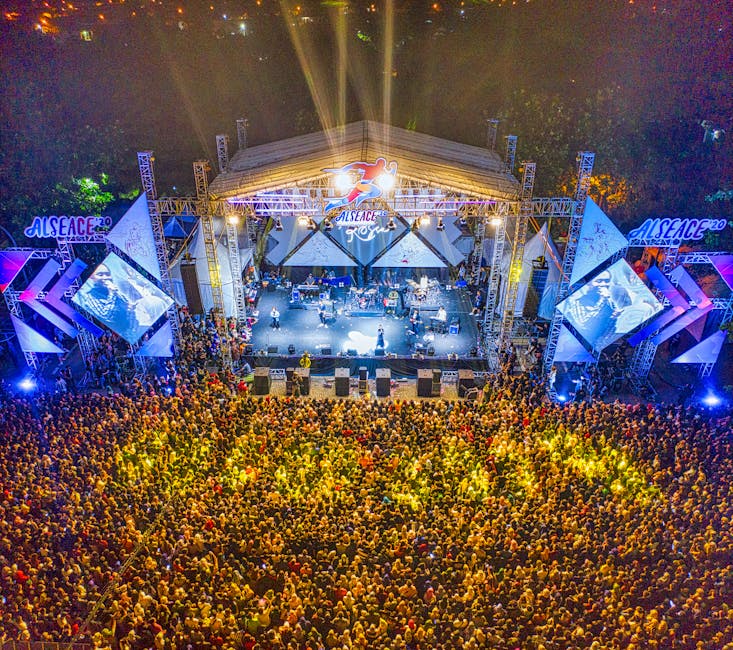
When the sun crests over the Santa Monica Pier and the first runners line up for the Los Angeles Marathon, there's a moment when the scale of human ambition becomes visible only from above. That perspective?the one that transforms a street race into a river of motion, a wedding reception into a constellation of celebration?represents the unique value proposition that drone photography brings to event professionals across the United States.
Event drone photography has matured from a novelty into an essential visual tool. From corporate product launches in Manhattan to county fairs in Iowa, aerial coverage adds dimension to storytelling that ground-based cameras simply cannot replicate. Yet capturing these moments legally, safely, and profitably requires understanding a specific framework of regulations, techniques, and client management strategies unique to American airspace.
This guide provides the practical foundation you need to move from enthusiastic hobbyist to professional event drone operator.
Understanding the American Regulatory
The Federal Aviation Administration's Part 107 certificate serves as your primary credential for commercial drone work in the United States. But certification alone doesn't authorize you to fly anywhere. Event photography frequently occurs in precisely the locations where airspace restrictions concentrate: stadiums, convention centers, theme parks, and urban gathering spaces.
FAA Airspace Basics for Event Photographers:
- Class B airspace surrounds major airports (LAX, JFK, ORD) and requires LAANC authorization
- Class C and D airspace covers smaller commercial airports?verify before any urban event
- Stadium TFRs (Temporary Flight Restrictions) activate 1 hour before and after events with 30,000+ attendees
- National Special Security Events trigger expanded restrictions
Before accepting any event contract, verify the specific airspace classification using FAA's B4UFLY application or DroneZone. For venues like Madison Square Garden in New York or AT&T Stadium in Arlington, Texas, you'll face NOTAM (Notice to Airmen) restrictions that effectively prohibit drone operations during events. Some clients don't learn this until the morning of their wedding?proper consultation prevents expensive disappointment.
Pre-Event Reconnaissance and Planning
Successful event drone photography begins days or weeks before the actual coverage. The American offers diverse terrain challenges: coastal venues battle salt spray and wind shear, mountain resorts face thin-air performance limitations, and desert locations fight thermal turbulence. Each requires strategic planning specific to the location.
Visit your venue in person if at all possible. Calculate expected sun angles for your planned shooting windows. Identify potential RF interference sources?many convention centers and corporate campuses have dense Wi-Fi networks that degrade signal range. Note emergency vehicle access routes; you cannot block ambulance paths even temporarily.
Pro Tip: Arrive at least 90 minutes before official start time. This allows for equipment setup, frequency coordination with other drones (if flying as a team), and buffer time if security personnel need verification documentation. Rushing creates errors?verify battery charge states twice and confirm SD card formatting while still in your vehicle.
The Client Consultation Framework
American clients arrive with varying levels of drone knowledge. Some expect Hollywood-grade footage; others don't realize you cannot fly over active crowds without a waiver. Establish clear expectations during consultation:
- Define deliverables: Still photos, video clips, or both? Highlight reels versus comprehensive coverage?
- Confirm venue authorization: Get written permission from property owners or event organizers
- Discuss privacy concerns: Neighboring properties, bystander faces in shots, sensitive corporate locations
- Establish timeline: When does coverage begin and end? Are there multiple shooting locations?
- Review restriction scenarios: What happens if weather grounded your flight? Build contingencies into contracts.
Average US Event Drone Coverage Pricing (2024 estimates):
- Small private event (under 100 attendees): $500?$1,200
- Medium corporate event or wedding: $1,200?$2,500
- Large public event or concert: $2,500?$6,000+
- Multi-day event with daily coverage: $8,000?$15,000
Pricing varies significantly by market?San Francisco and New York command premiums; rural markets offer less but face fewer airspace restrictions.
Equipment Selection for Event Work
American event environments demand reliability over maximum specifications. The perfect shot means nothing if your drone descends into a lake during a Chicago lakefront wedding. Select equipment that balances imaging quality, flight safety, and practical portability.
For most event photographers, a DJI Mavic 3 Pro or Autel EVO II Pro represents the optimal tool choice. These aircraft offer:
- Obstacle avoidance in five directions
- Longer flight times (40+ minutes per battery)
- Professional-grade sensors for low-light indoor shoots
- Compact folding designs that pass through doorways and fit in overhead bins
However, consider your specific needs:
| Venue Type | Recommended Aircraft | Key Consideration |
|---|---|---|
| Large outdoor stadium | DJI Mavic 3T or equivalent with zoom | Safety distance from crowds; zoom keeps you away |
| Indoor ballroom/event hall | DJI Avata (cinewhoop style) | Tighter spaces; enclosed propeller guards |
| Coastal/beach events | Corrosion-resistant aircraft | Salt spray damage; rapid battery changes |
| Night events | Aircraft with external lighting kit | FAA night waiver compliance; visibility |
| Multi-day festivals | Primary + backup identical aircraft | Consistency across footage; redundancy |
Flight Execution: Managing the Dynamic Environment
Event environments evolve constantly. Guests move unpredictably, vehicles reposition, and weather shifts. Your flight plan must accommodate chaos while maintaining safety margins.
During outdoor events, wind becomes the primary operational constraint. The FAA recommends limiting operations to 25 mph sustained for standard operations, though experienced pilots routinely handle higher speeds with reduced maneuverability. Monitor gust patterns?thermal buildup in afternoon sun creates turbulence near concrete and asphalt surfaces common at American parking lots and fairgrounds.
Pro Tip: Maintain visual line of sight at all times, but position yourself strategically to minimize interference with event flow. At outdoor weddings, the ceremony site typically offers the clearest airspace. Communicate with the officiant and wedding planner about timing?coordinating your drone's ascent with the couple's entrance creates the most impactful footage without disrupting the ceremony.
Indoor flight presents unique challenges. GPS signal degradation requires altitude hold adjustments. Thermal sensors struggle with artificial lighting. Wireless interference from venue AV systems can cause connection dropouts. Practice indoor flying before your first paid gig?master the aircraft's ATTI (attitude) mode for when GPS fails.
"The best aerial footage happens when the drone becomes invisible?when the operator is so familiar with the aircraft that all attention flows toward capturing the moment, not managing the machine."
Specialized Event Applications
Sports Coverage
American sports events range from Little League games in suburban parks to NFL games under Monday Night Football lights. Stadium operations require coordination with team security and understanding of league-specific policies. Major League Baseball, the NFL, and NCAA institutions all maintain drone prohibitions during active play, but pre-game and post-game aerial shots are often permitted with proper credentials.
Music Festivals and Concerts
Events like Coachella in Indio, California, or ACL Festival in Austin, Texas, present complex airspace. Artist riders frequently include drone prohibitions to protect proprietary stage production reveals. Always confirm with event organizers and, when possible, directly with artist management. The financial and reputational damage from violating an artist's privacy vastly outweighs any footage value.
Real Estate and Construction Industry Events
Groundbreaking ceremonies, ribbon-cuttings, and project completions represent growing opportunities in the American market. These events often occur at active construction sites with additional OSHA considerations. Confirm site-specific safety requirements beyond FAA compliance?steel crane operations, loose debris, and temporary structures create hazards standard event planning doesn't address.
Key State and Local Considerations:
While FAA regulations apply nationally, 23 states have enacted additional drone laws. Notable examples include:
- Florida: Prohibits drone use over critical infrastructure (including energy facilities common at industrial events)
- California: AB 1680 restricts drone surveillance of people without consent
- Texas: HB 1793 prohibits law enforcement use of drones for surveillance without warrants?but commercial operators should still obtain proper permissions
Always verify current local ordinances before operating, as regulations change frequently.
Post-Processing and Client Delivery
Aerial footage requires distinct processing workflows compared to ground photography. Color grading for sky-dominant frames differs from standard portrait corrections. Stabilization processing removes micro-jitter from wind-affected shots. Pacing for video deliverables should complement event themes?energetic cuts for corporate launches, smoother transitions for memorial events.
American clients expect cloud delivery platforms and fast turnaround. Include GPS location metadata in image files?architects, planners, and event coordinators frequently use this data for future planning. Deliver watermarked previews for approval before full-resolution files, particularly for corporate clients who may have internal stakeholders reviewing content before final acceptance.
Building Sustainable Client Relationships
The US event photography market rewards consistent quality and professional communication. Event coordinators, wedding planners, and corporate marketing departments maintain preferred vendor lists. Your success depends on insertion into these networks.
Consider these relationship-building strategies:
- Offer educational content to potential clients explaining drone capabilities and limitations
- Provide comprehensive insurance certificates?most corporate venues require $1M+ liability minimums
- Create standardized event packages that simplify client decision-making
- Maintain active social media presence featuring work from diverse event types
- Network with wedding industry associations and corporate event planners associations (ISES, MPI chapters)
Insurance deserves particular attention. Verify your policy explicitly covers event photography?some commercial policies exclude aerial operations or high-attendance gatherings. American Business Insurance and AVIXA offer specialized drone coverage. Venue managers will request certificates of insurance naming them as additional insured parties; establish this process early to avoid contract delays.
Risk Management and Contingency Planning
Professional event drone operation requires documenting your risk management approach. Clients increasingly request this information during vendor selection. Develop a written safety protocol covering:
- Pre-flight inspection checklist
- Emergency landing zone identification
- Weather monitoring and abort criteria
- Equipment failure response procedures
- Communication protocol with event security
- Post-incident documentation requirements
Common Event Drone Failures and Solutions:
- Battery failure mid-flight: Always maintain 20% reserve; land immediately when reaching threshold
- Signal loss: Configure return-to-home altitude higher than surrounding obstacles
- Spatial disorientation: Maintain consistent orientation; avoid flying directly toward or away from sun
- Flyaway (uncontrolled flight):strong> Enable geofencing; verify home point accuracy before each flight
- Propeller strike: Maintain safe distances; use obstacle avoidance systems actively
Developing Your Event Specialty
Generalist event drone work provides income, but specialists command premium pricing and repeat business. Identify event categories matching your interests and local market opportunities:
Destination resort photography in areas like Aspen, Scottsdale, or Napa Valley attracts clients willing to pay premium rates for unique location coverage. Agricultural and rural events?county fairs, rodeos, harvest festivals?face fewer airspace restrictions and often reward creative perspective with enthusiastic audiences.
Corporate events at major hotel chains and convention centers (Marriott, Hilton, Hyatt properties) maintain consistent standards across locations, making it easier to secure multi-property corporate contracts once established. Tech company events in Silicon Valley, Seattle, and Austin frequently request drone coverage with quick turnaround expectations?align your workflow accordingly.
Final Operational Thoughts
American event drone photography combines technical skill, regulatory knowledge, and client service into a rewarding commercial pursuit. The market continues expanding as organizations recognize aerial coverage's value for documentation, marketing, and historical record.
Your career trajectory depends on consistent execution. Every event represents an opportunity to demonstrate reliability and creative capability. The drone industry respects reputation built through small jobs well-completed before seeking headline corporate contracts.
Start local. Build a portfolio across diverse event types. Develop relationships with coordinators who refer business. Maintain rigorous compliance standards even when clients pressure for shortcuts. These fundamentals separate professionals who sustain careers from enthusiasts who burn out after a season.
The sky offers unlimited creative potential?but only to operators who respect both its power and the regulations that keep American airspace safe for everyone.